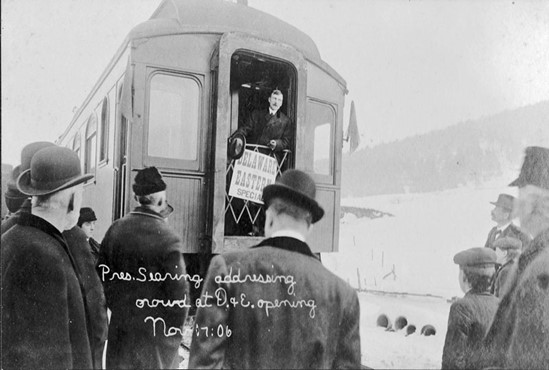
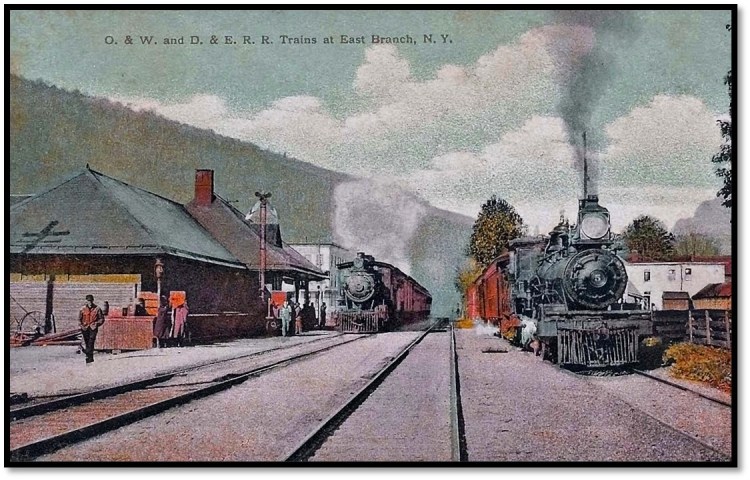
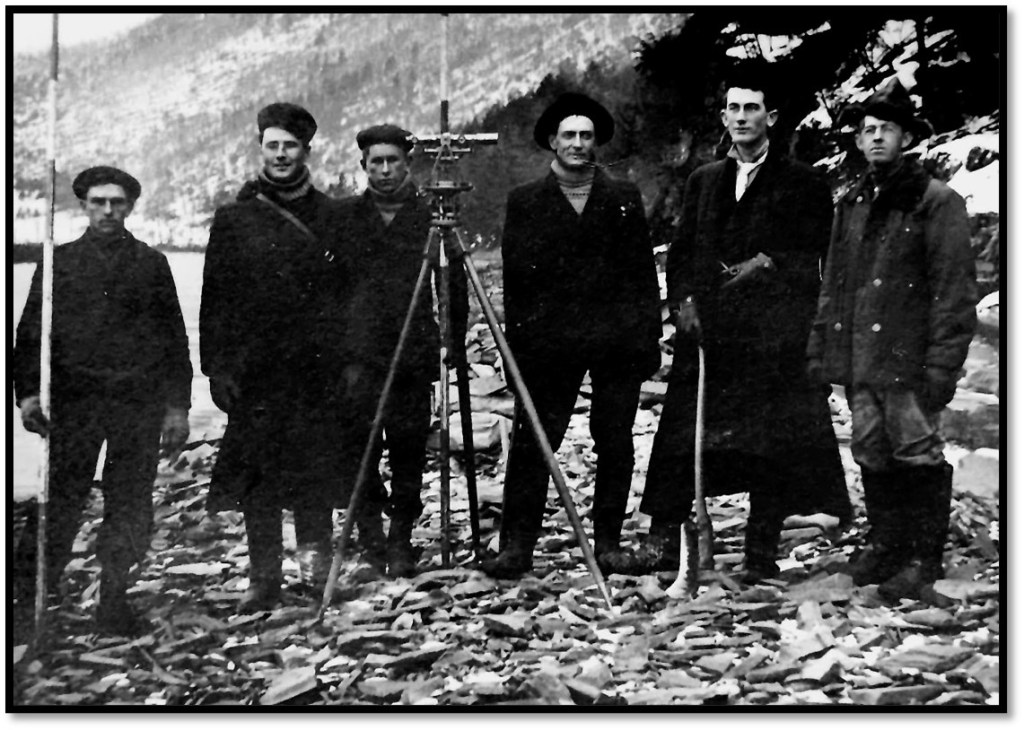
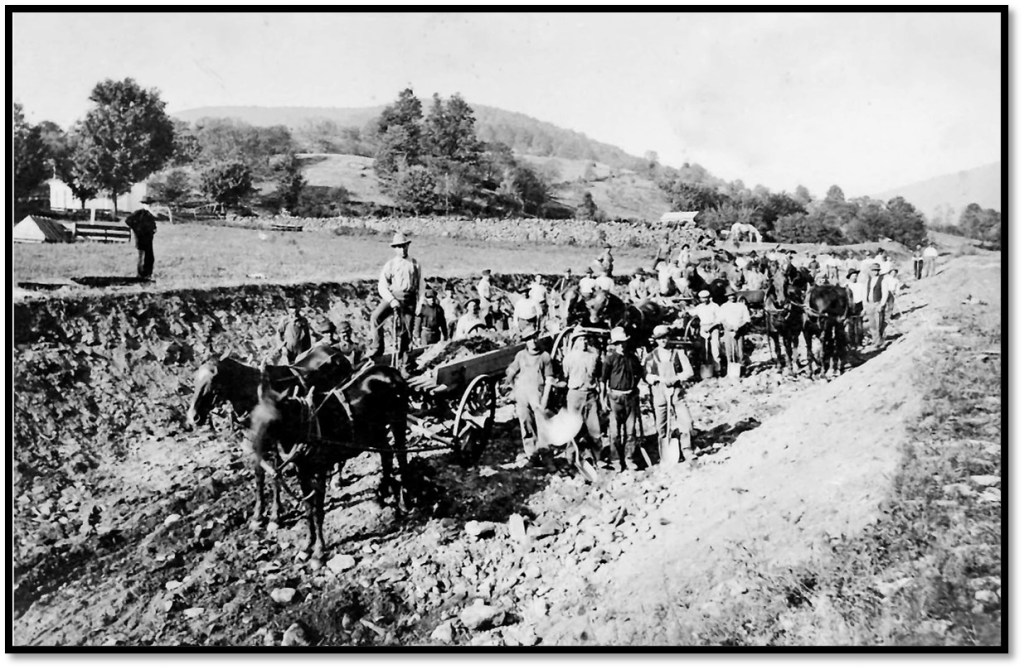
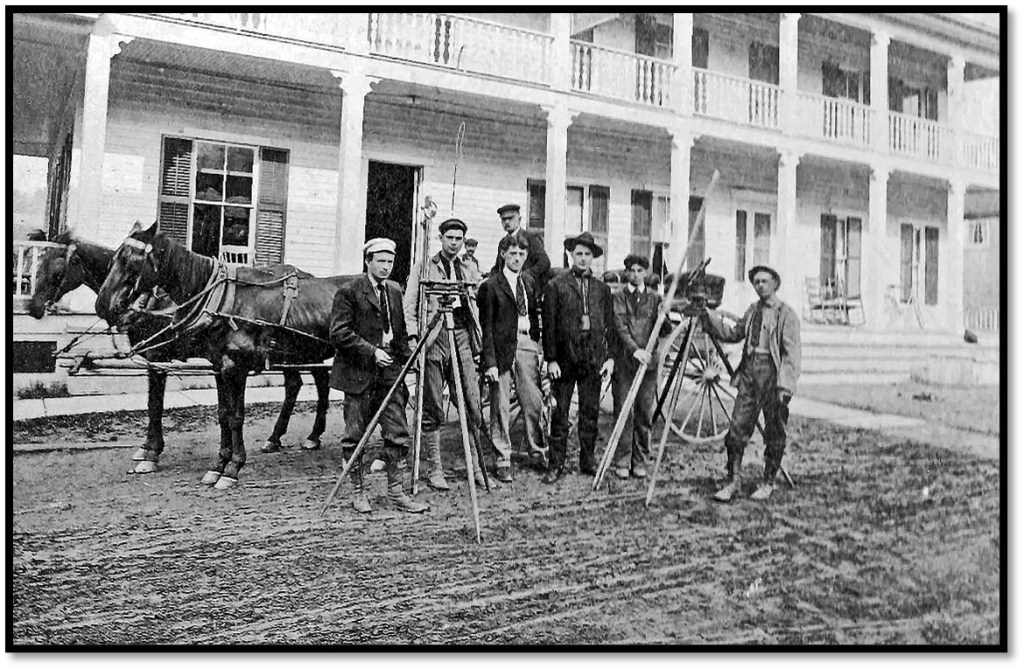
“The idea of constructing a railroad along the East Branch of the Delaware River was a plan devised by Frederick F. Searing, president of Searing & Company, an industrial banking house located in downtown New York City. Early in 1904, Searing and his party were touring the Catskill Mountains and arrived at East Branch, New York, on an evening train of the New York Ontario & Western Railroad. The next day they chartered a team of horses and a carriage to take a trip up the river to Downsville, a distance of fourteen miles. They arrived four and half hours later were surprised to find a neat little village in the foothills of the mountains with hotels, stores, churches, and well laid out roads and sidewalks. They were very impressed to find such a beautiful and well-maintained community in the middle of nowhere. Searing made up his mind that he would build a railroad through this beautiful mountain valley. The wheels had been set in motion and the idea of a railroad would quickly blossom into reality.”
Rails Along the East Branch: The Delaware & Northern Railroad by John M. Ham and Robert K Bucenec
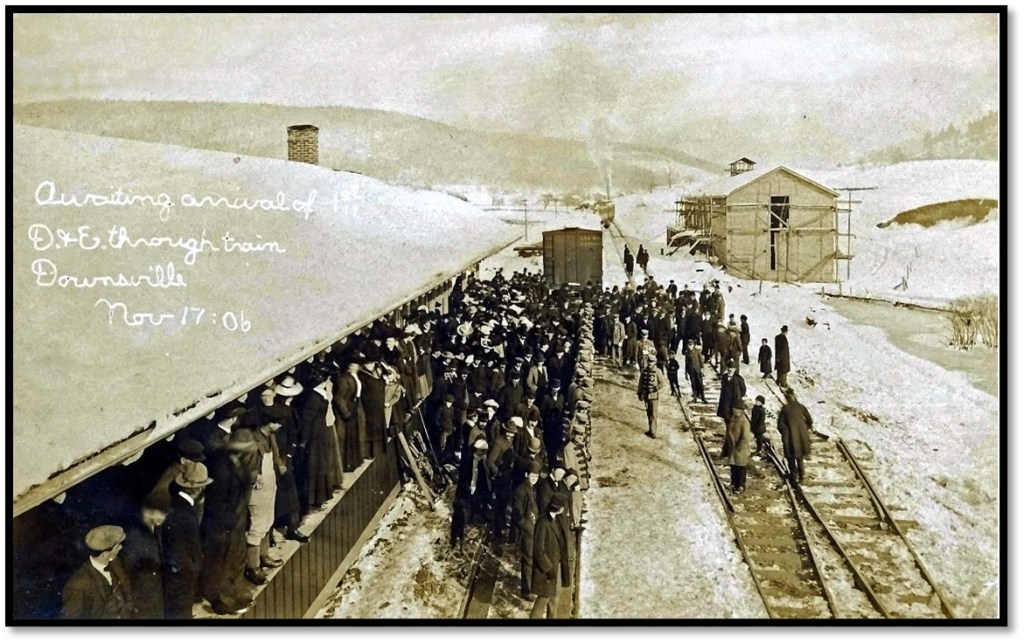
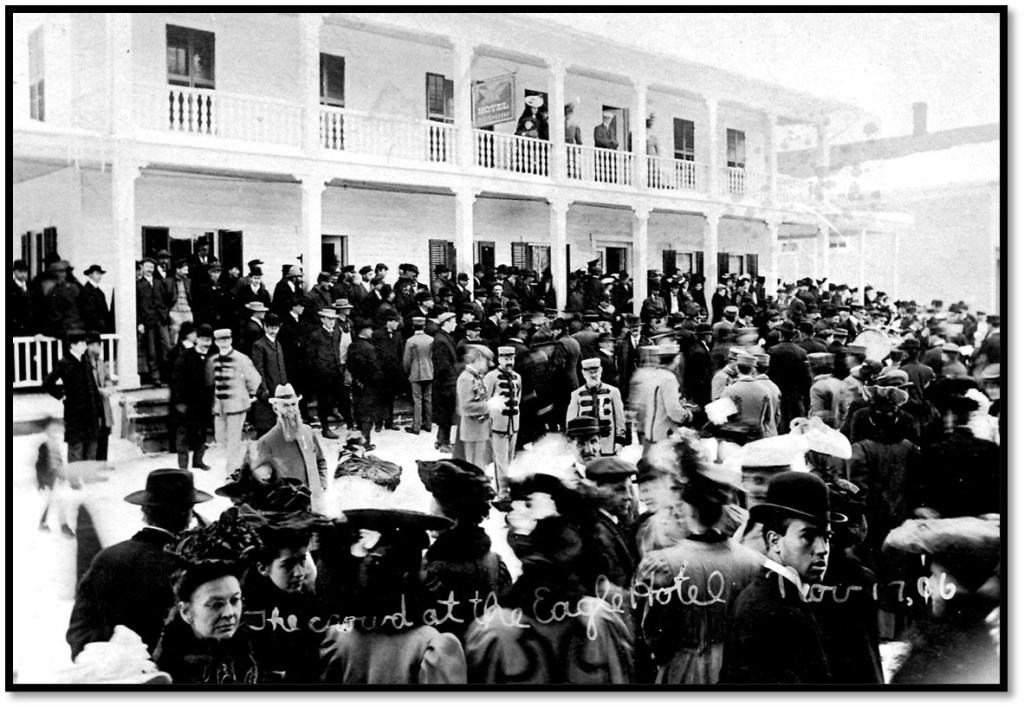
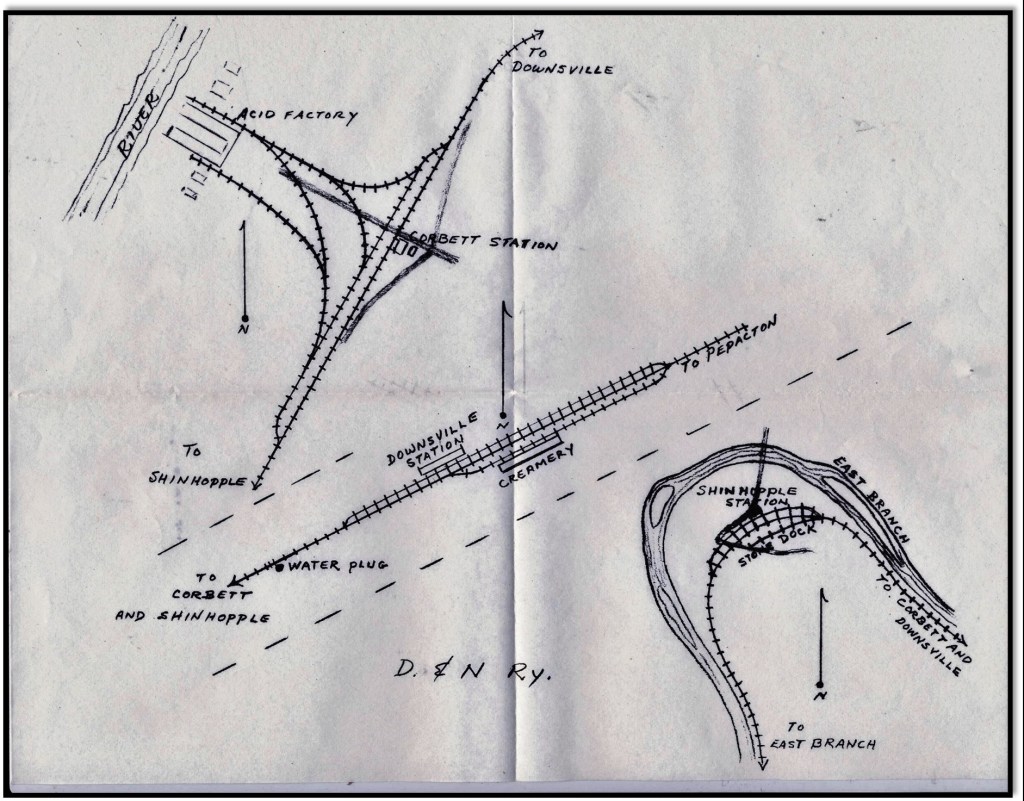
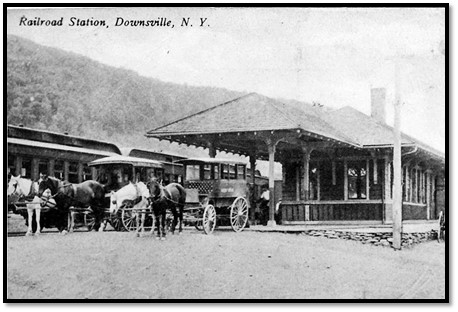
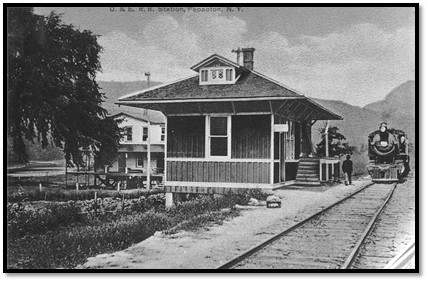
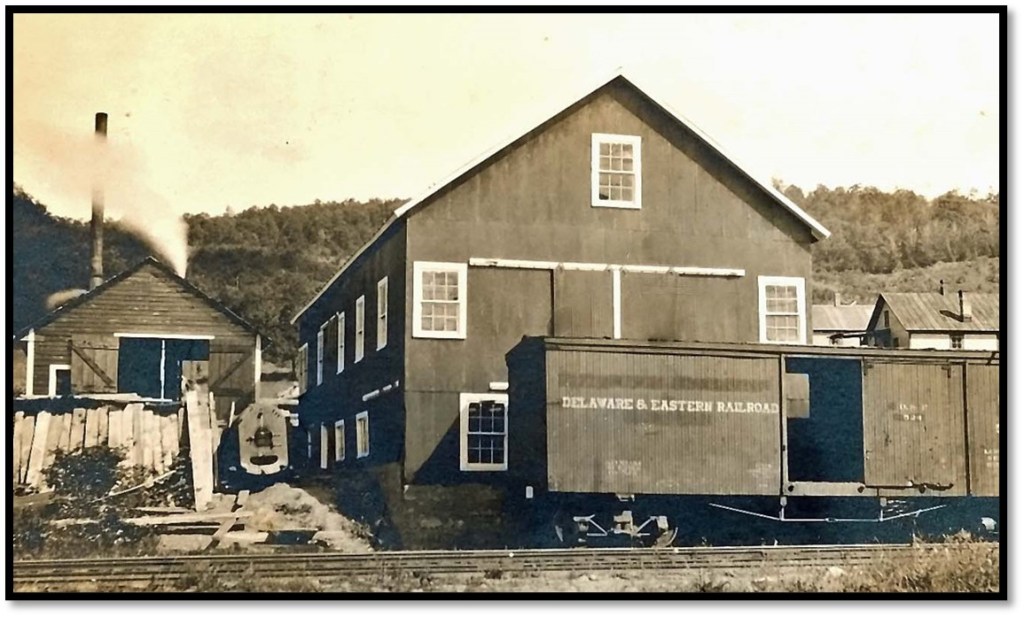
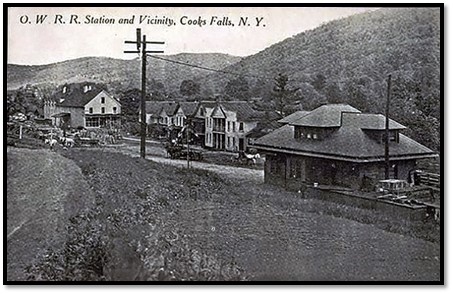
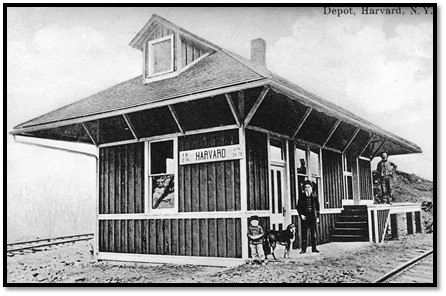
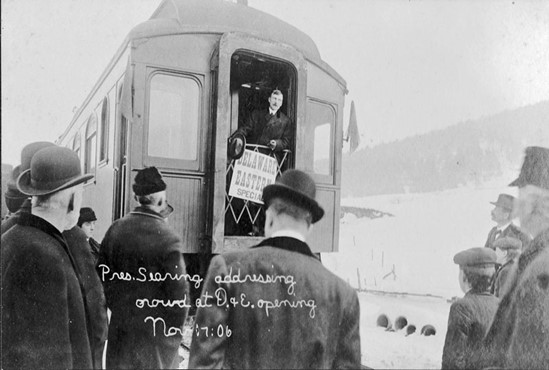
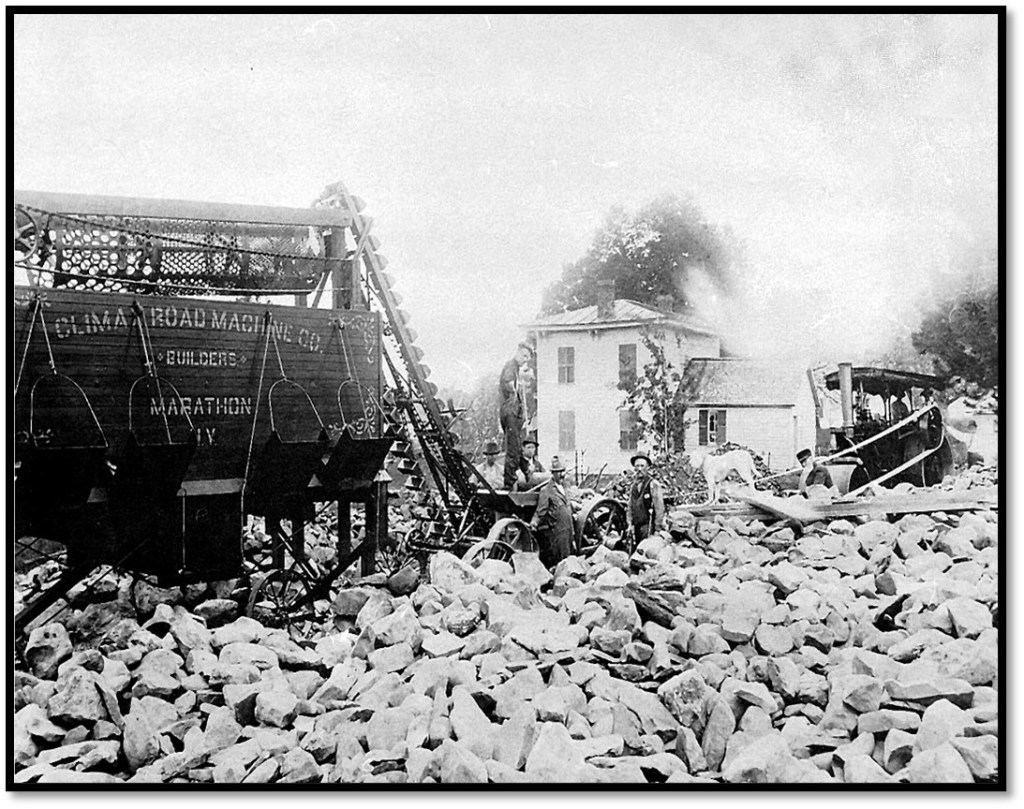
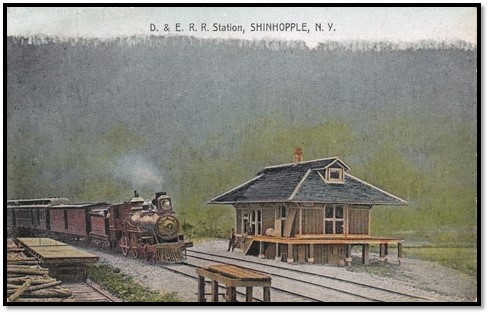
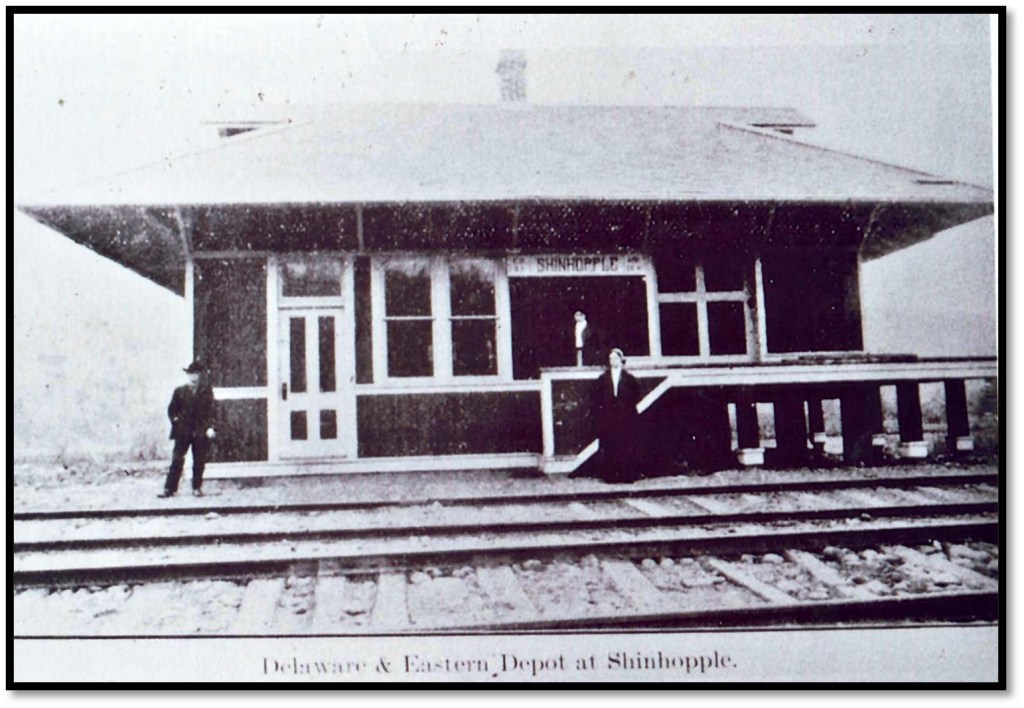
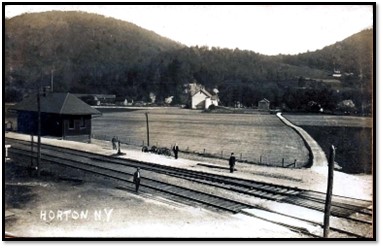
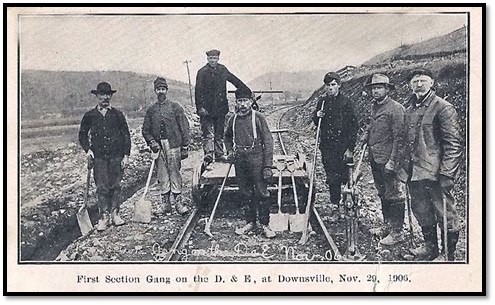
The first train arrived in Downsville on November 6, 1906. The Delaware and Eastern railroad, later renamed the Delaware and Northern, changed the way business was conducted in Downsville. The trains provided an economical and quick way to take local products to the city markets. There were now four mail deliveries a day, freight could be hauled to and from the village and people could travel much farther than they ever had been able to before. The bluestone industry had been mostly a local business but with the building of the railroad it expanded and quarries struggled to keep up with the construction materials demands from New York City. Sawmills and Acid Factories also expanded. Creameries benefitted from the easy access to the railroad, the B& B Creamery was built next to the D & E Rail Station. Farmers could now bring their milk to the creamery and it could ship its product to New York City on the express freight trains.
Circa 1900

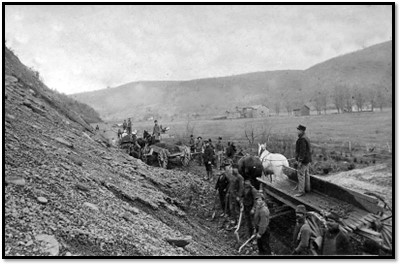
 Colchester Historical Society