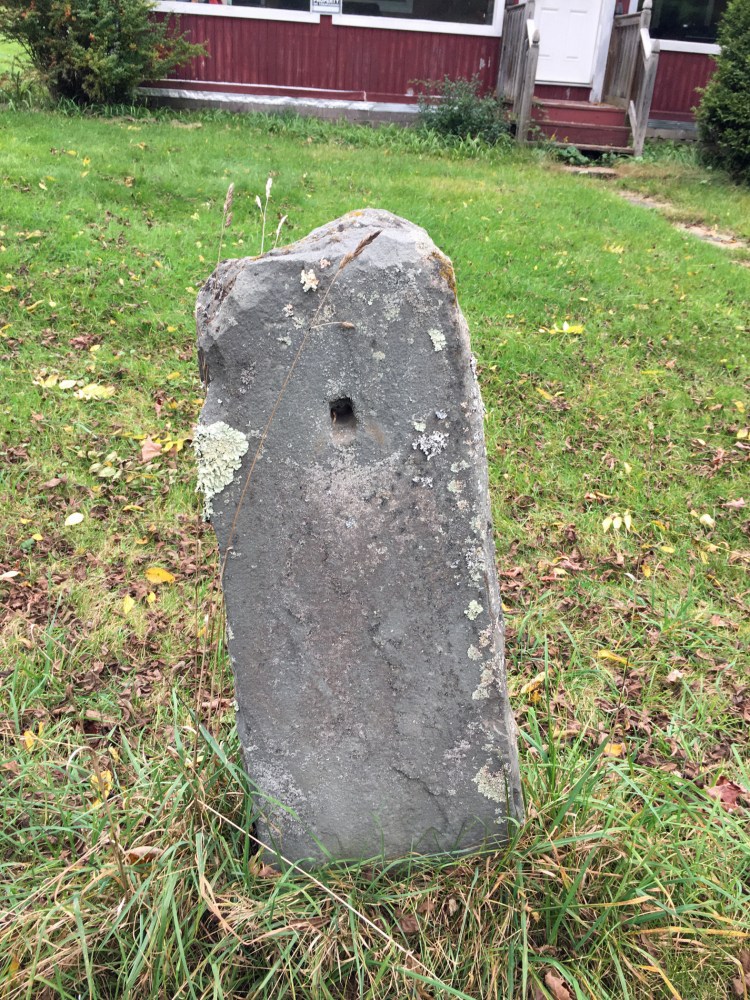
You have probably walked by Colchester’s hitching posts without ever noticing that they were there. But during the heyday of horse drawn transportation hitching posts and mounting stones graced the fronts of homes and businesses throughout Colchester. Downsville is fortunate to have several of these artifacts still standing. These pillar styles were cut from local Blue Stone quarries. Most of these were drilled and fitted with iron hitching rings and chains for securing horses to the hitching posts. These sturdy posts were buried deep in the ground to make sure that they could hold the strength of a horse. Later hitching stone post versions were cast of concrete. Simple horse mounting blocks or upping stones evolved into stepping or carriage stones with two steps to allow men to dismount easily and ladies to dismount from carriages without dragging their skirts in the mud. The Colchester Methodist and Presbyterian churches had mounting stones in front of the churches and near their stables in the rear of the church lots. Most of the stores and businesses along Main Street provided hitching posts and mounting steps for their customers.
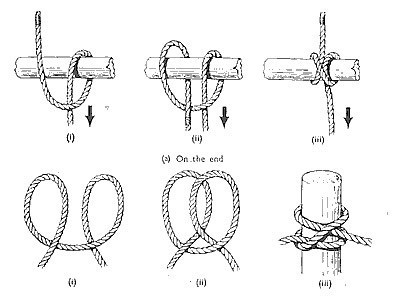
“Upon arriving at his or her destination, the rider would dismount the horse or vehicle, and tie the reins which were attached to the horse’s bridle to the post with a “hitch”, a type of knot or tie. Hitches varied in style, and travelers could opt for the simple clove hitch if they had only a horse and were in a hurry, or the more difficult but secure rolling hitch to secure a wagon or carriage.”
Courtesy: http://townsvillagemaritimemuseum.org.au/
Most hitching posts were removed when Route 206 and 30 roadways were widened. Others were removed by homeowners and businesses when the railroad made stage coaches and carriages unnecessary and when automobiles arrived in Colchester the posts became obsolete.
Click through the slideshow below of the remaining hitching posts and carriage or mounting steps along Downsville’s Main Street and Maple Avenue.

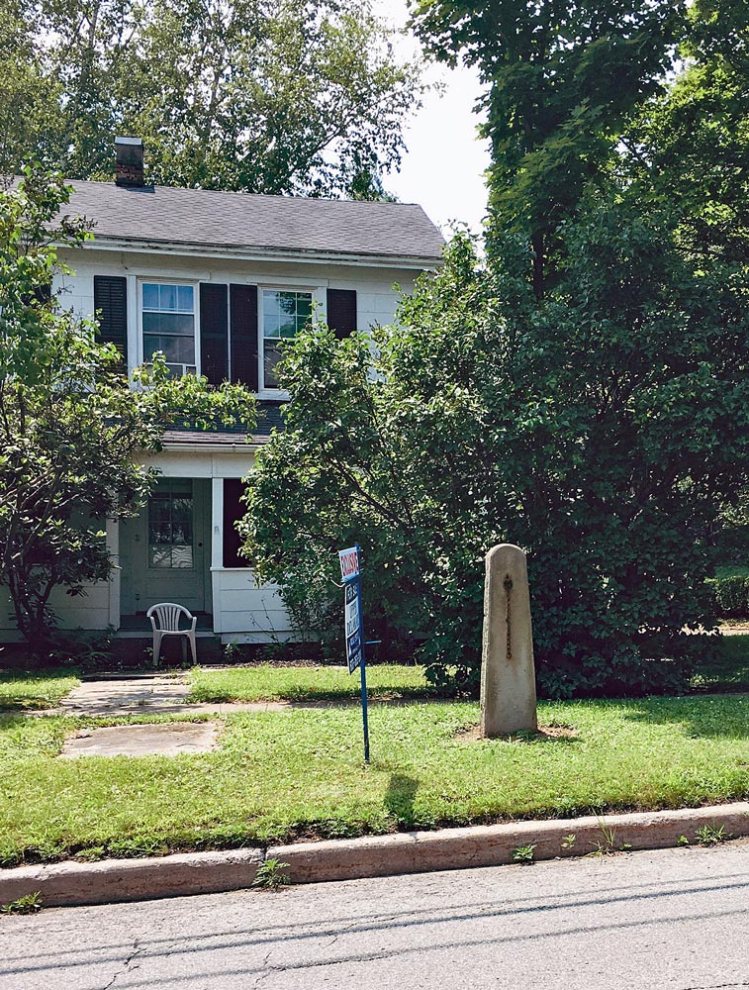
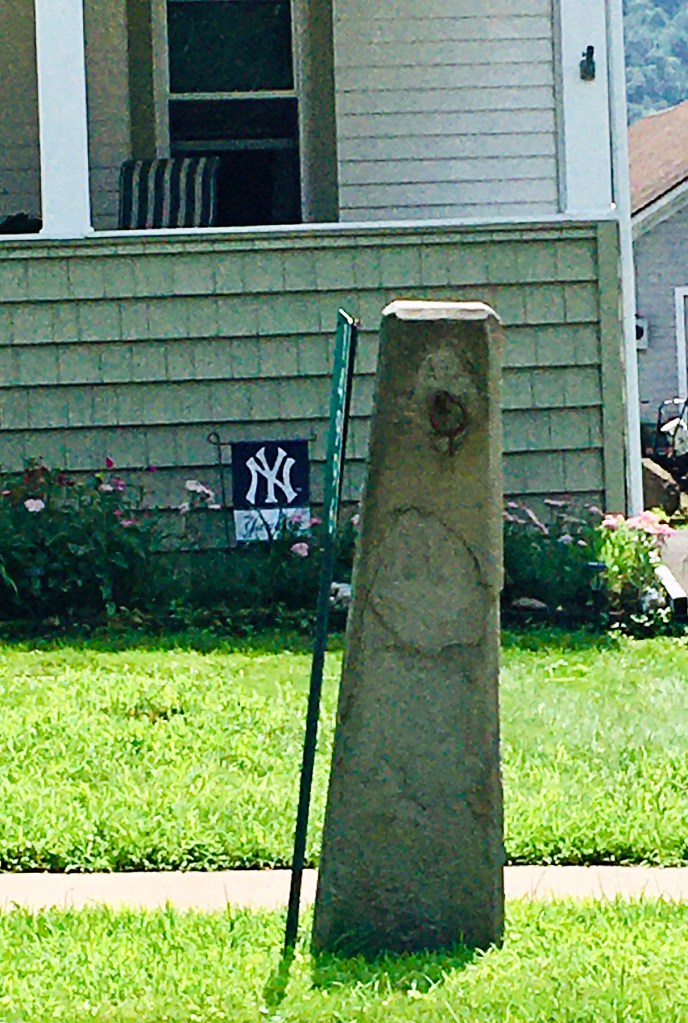


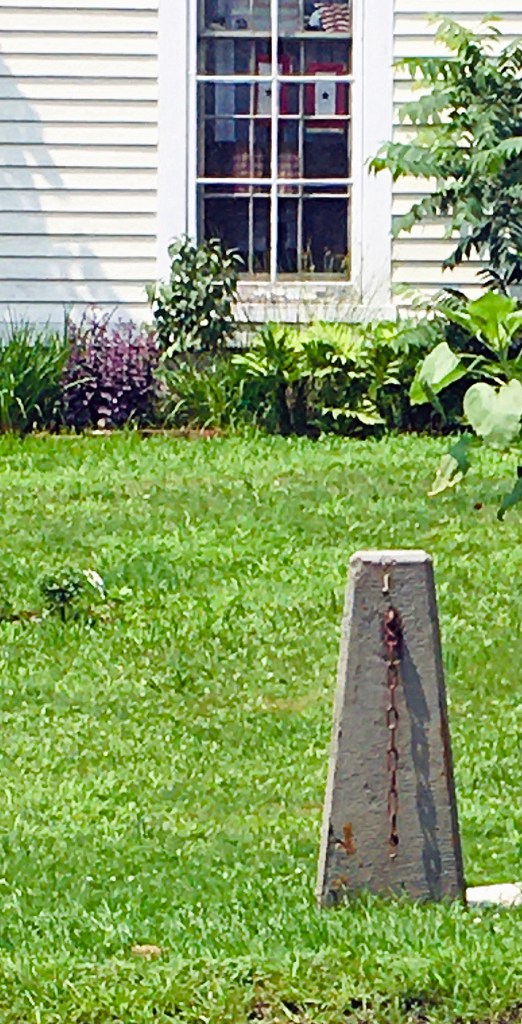


 Colchester Historical Society