Early Settlers
The earliest histories of Colchester go back to the log cabin built by Timothy Gregory in 1766, at the bottom of Fuller Hill. This area around his cabin became known as Gregorytown. Early settlers used the trail from Minisink, near Port Jervis, through the mountains to join Gregory. Most of those families abandoned their farms, fearing attacks by Tories and Native Americans and withdrew to the safety of Port Jervis during the Revolutionary War. After the Revolution families returned to the Gregorytown area.
Timothy Gregory built the two first framed barns in Colchester and the third wood frame home in 1789, bringing the sawn lumber for his house ten miles by canoe from the Beaverkill. He opened the first sawmill in Gregorytown in 1816. A bend in the river, well known by fly fishermen is called, “Tim’s Turn,”
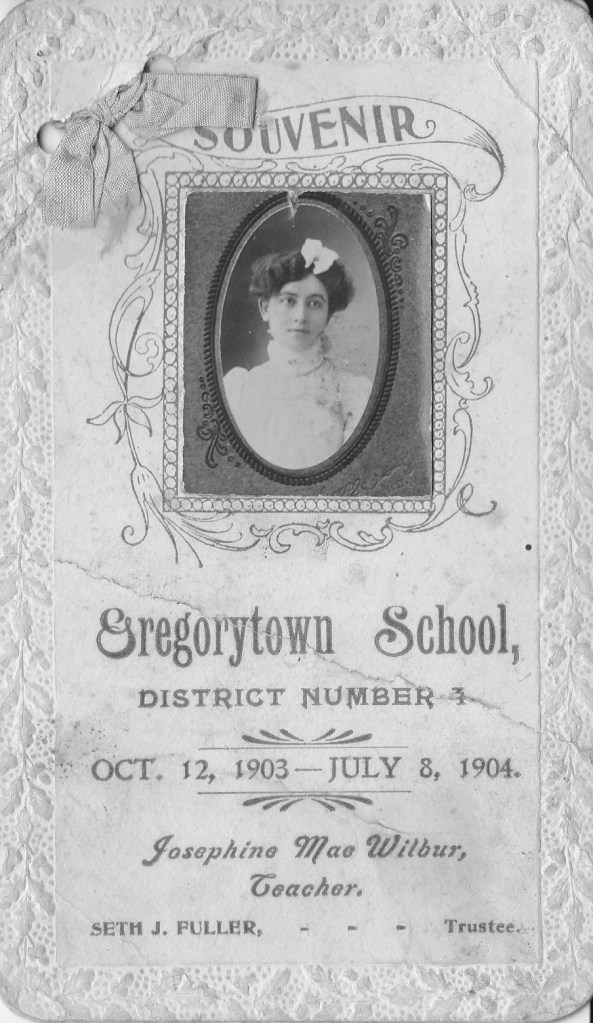
Gregorytown School


Gregorytown Church
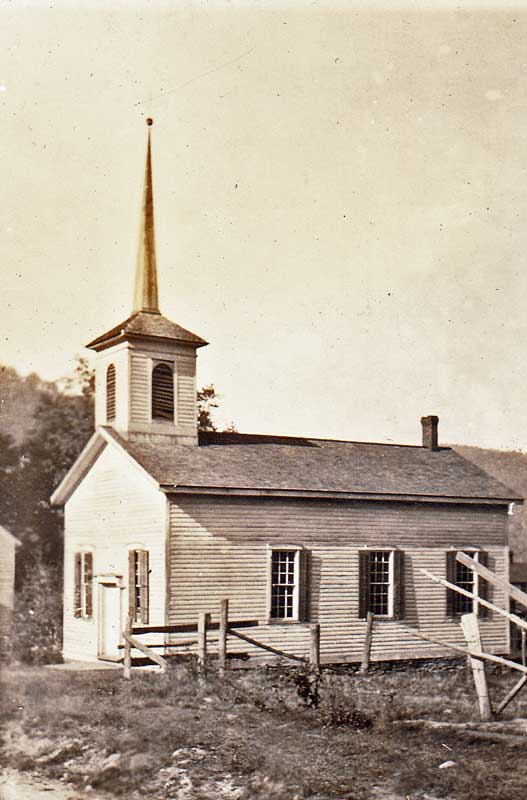
The original building was built in 1850 as the residence of Amos Gregory with lumber from his up-and-down sawmill; with 6”x6” studs placed every four feet. In 1880 Jason Gregory offered land and a building for a church in Gregorytown. The original residence was moved about 100 feet down River Road to its present location on the corner of Fuller Hill Road and Back River Road. The Methodist Church had an active congregation during the height of the acid factory era and was later converted into a school house. There was a tradition of ringing the church bell every Fourth of July and New Year’s Eve. The bell rang from 1880 until 1969 when a fire partially destroyed the building and cracking the bell.
The original deed specified that if the building was no longer used as a church or school that the property would revert back to Amos Gregory’s heirs. The school closed in 1921 when Gregorytown voters decided to run only one school in the District on Baxter Mountain.
In 1959 Jeremy Gregory and his wife retired to the Gregorytown church building, adding several rooms to the structure. The building is now owned by Lillian Kiakis.

Gregory Hollow-Threshing Rock
Just outside of Downsville is a landmark called the “Threshing Rock.” High on the ridge on property once owned by Poppy Raynor, and now on Jerry Stone’s property, this threshing floor is a flat bedrock 119 feet long and 72 feet wide. The rock is inscribed with dates ranging from 1880 to 1927, and the initials of the local farmers who used the threshing rock to harvest their grain. Local farmers would bring their harvests and use flails to thresh the grain. Threshing rocks are usually located in high places to take advantage of the winds that help the work of winnowing, separating the grain from the chaff.
A flail is a hand tool which consists of two pieces of wood, the handstaff or helve which is about five feet long and the beater which is the second stick about three and half feet long; the two pieces are joined by a thong made of leather or eel skin. With this method a man could thresh 70 bushels of grain in one day. The top of the Downsville Threshing Rock is worn smooth by the pounding of these flails. The flail and threshing rocks were used until the mid-19th century when mechanical threshers were invented. Legend says that local farmers would gather in the fall at the threshing rock for “threshing bees.” During these harvest celebrations the threshing floor could hold ten square-dance sets.
 Colchester Historical Society